
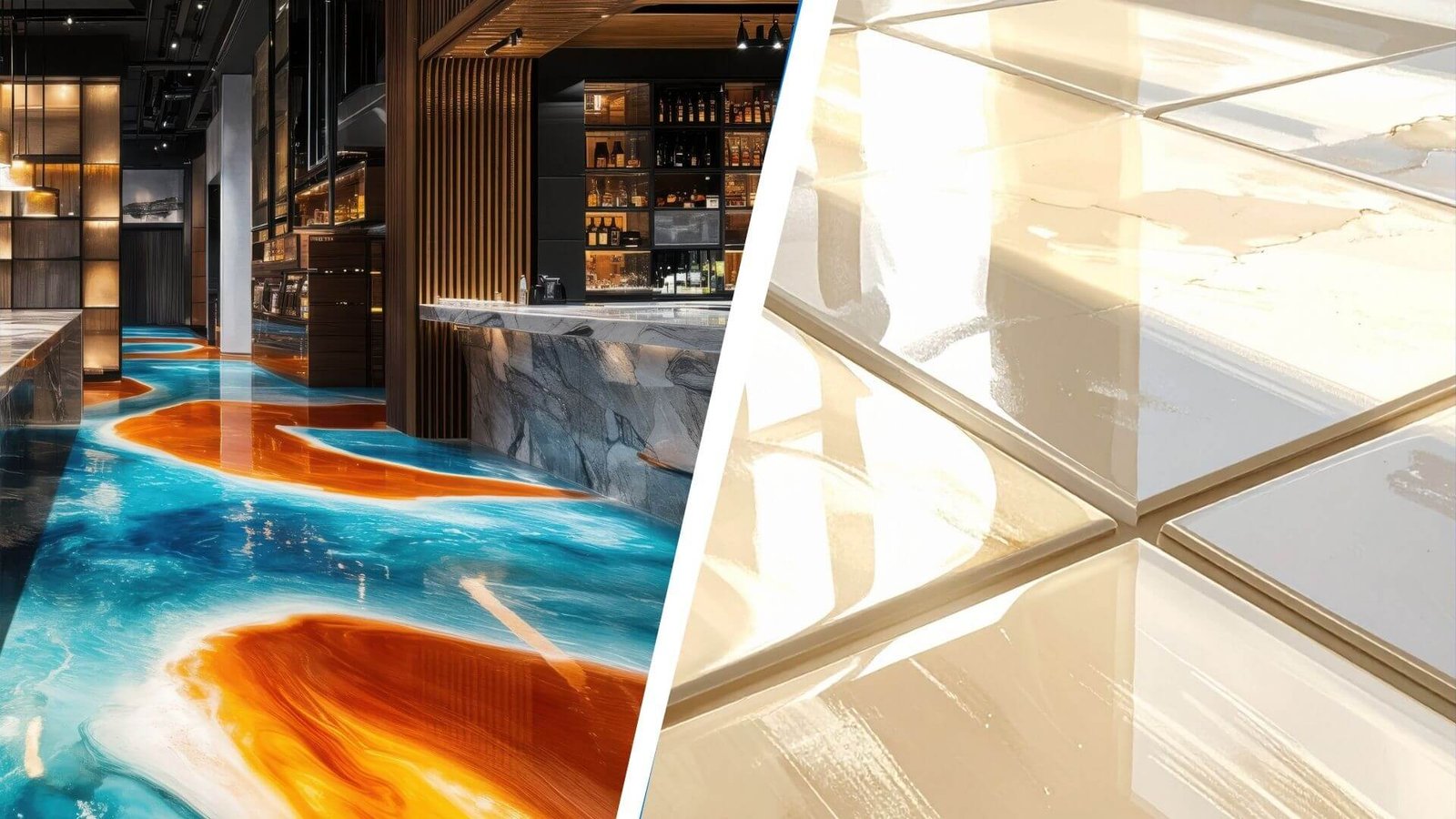
Choosing the right flooring can make or break the look, feel, and longevity of your home’s interior. With so many materials available, epoxy flooring vs tiles has become a common comparison among homeowners. Both options are stylish and durable, but they serve different purposes depending on your space, budget, and maintenance preferences. In this blog, we will break down the pros and cons of each to help you make the best decision for your home.
Understanding Epoxy Flooring
Epoxy flooring is a type of seamless floor coating made by combining resin and hardeners. Once cured, it forms a hard, glossy, and highly durable surface that bonds tightly to concrete. This makes it especially popular for garages, basements, and even modern living spaces.
Advantages of Epoxy Flooring
- Durability and Strength
Epoxy floors can withstand heavy traffic, machinery, and impact without cracking or wearing down easily. According to a study by Coatings World, epoxy coatings can last up to 10–20 years with proper maintenance. - Chemical and Stain Resistance
Epoxy surfaces resist chemicals, oil, and water, making them ideal for garages, workshops, and kitchens where spills are common. - Aesthetic Appeal
Available in a wide range of colors and finishes, epoxy can mimic marble, quartz, or metallic effects. Its glossy, seamless appearance gives modern homes a sleek, polished look. - Low Maintenance
The smooth, non-porous surface makes cleaning a breeze. Dust and debris can be easily wiped or mopped away, and no grout lines trap dirt.
Disadvantages of Epoxy Flooring
- Installation Time and Expertise
Epoxy flooring requires professional installation and several curing steps, which can take multiple days. - Slipperiness When Wet
The glossy finish can become slippery if not mixed with an anti-slip additive. - Permanent Application
Once installed, removing or changing epoxy is difficult and costly.
Understanding Tile Flooring
Tile flooring has long been a favorite for homeowners due to its versatility and range of styles. Made from materials like ceramic, porcelain, or natural stone, tiles are laid in sections with grout between each piece.
Advantages of Tile Flooring
- Design Variety
Tiles come in endless colors, patterns, and textures, allowing homeowners to customize any space. You can choose from wood-look tiles, marble finishes, or even mosaic designs. - Durability and Scratch Resistance
Porcelain tiles, in particular, are known for their toughness and ability to resist scratches, making them suitable for kitchens, hallways, and bathrooms. - Water Resistance
Tiles are naturally water-resistant, especially when sealed properly, which makes them ideal for wet areas such as bathrooms and laundry rooms. - Ease of Replacement
If a tile cracks, it can be replaced individually without redoing the entire floor.
Disadvantages of Tile Flooring
- Cold and Hard Underfoot
Tiles can feel cold, especially in winter, and are less forgiving on your feet compared to other flooring options. - Grout Maintenance
Over time, grout lines can collect dirt and require regular cleaning or resealing. - Slippery When Wet
Similar to epoxy, tiles can be slippery, particularly in glossy finishes.
Cost Comparison: Epoxy vs Tiles
| Flooring Type | Average Cost (Per Square Foot) | Installation Complexity | Lifespan |
|---|---|---|---|
| Epoxy Flooring | $3 – $12 | Moderate to High (requires professionals) | 10–20 years |
| Tile Flooring | $5 – $15 | Moderate (can be DIY but time-consuming) | 20–50 years |
Epoxy floors are generally more affordable upfront, especially for larger concrete spaces. Tiles, however, often deliver a longer lifespan and higher resale appeal, especially when high-quality materials are used.
Maintenance and Longevity
When comparing epoxy flooring vs tiles, maintenance plays a major role in long-term satisfaction.
- Epoxy Flooring: Requires minimal cleaning and no special detergents. However, once damaged, the repair process can be extensive.
- Tile Flooring: Easier to repair but needs regular grout cleaning to prevent mold and discoloration.
Both can last decades with proper care, but epoxy’s seamless nature makes it more hygienic for garages or industrial-style homes, while tiles suit more traditional interiors.
Aesthetic and Design Flexibility
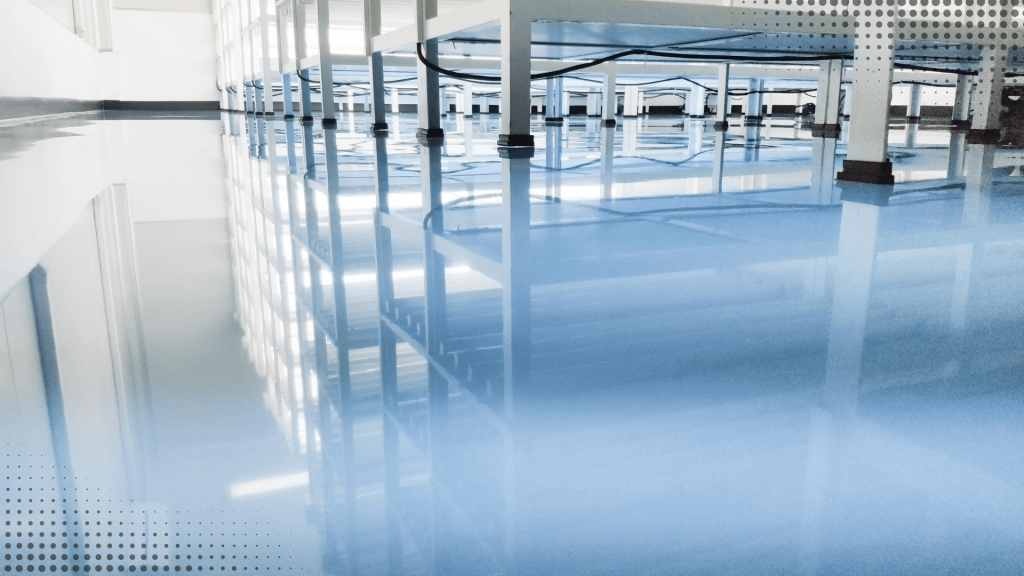
If your goal is a modern, sleek look, epoxy flooring delivers unmatched shine and a seamless finish that pairs beautifully with industrial or minimalist home designs. Tiles, on the other hand, offer more texture and character, allowing you to create classic or rustic looks.
For open-concept homes, epoxy can create a continuous flow between rooms, while tiles can define areas with different colors or layouts.
Environmental Considerations
Tiles are made from natural materials and can often be recycled, making them an eco-friendly option. Epoxy flooring, while durable, is petroleum-based and requires careful disposal after its lifespan ends. However, new low-VOC epoxy products are improving environmental safety.
Which Flooring Is Right for You?
When choosing between epoxy flooring vs tiles, consider your home’s style, purpose, and budget:
- Choose Epoxy Flooring If:
- You want a smooth, seamless finish.
- The area is exposed to heavy traffic, chemicals, or moisture (e.g., garage, basement).
- You prefer low-maintenance flooring with a modern touch.
- Choose Tile Flooring If:
- You want timeless style and variety.
- The room is a high-visibility area like a kitchen or bathroom.
- You value long-term durability and easy replacement options.
Conclusion
Both epoxy flooring and tiles offer unique benefits for different areas of your home. Epoxy flooring provides strength, seamless beauty, and low maintenance, while tiles deliver timeless design, longevity, and versatility. The right choice depends on how you use your space and the aesthetic you wish to achieve.
For expert flooring advice or professional installation, consult a trusted contractor who specializes in both materials. Making an informed decision today ensures your home’s flooring remains beautiful and functional for decades to come.